+The Archive

Five centuries of dead artists. One wall at a time.

The Archive is museum-scanned public-domain art, printed to order on archival matte. Every plate here outlived its maker — these are the stories.

+1510 / Strasbourg

The witch panic, cut in wood

Hans Baldung Grien cut his witches into wood while Europe hunted real ones. Warning, satire, or obsession — five hundred years of scholars still argue. The ambiguity is the point, and the reason they still hang.

Meet the witches
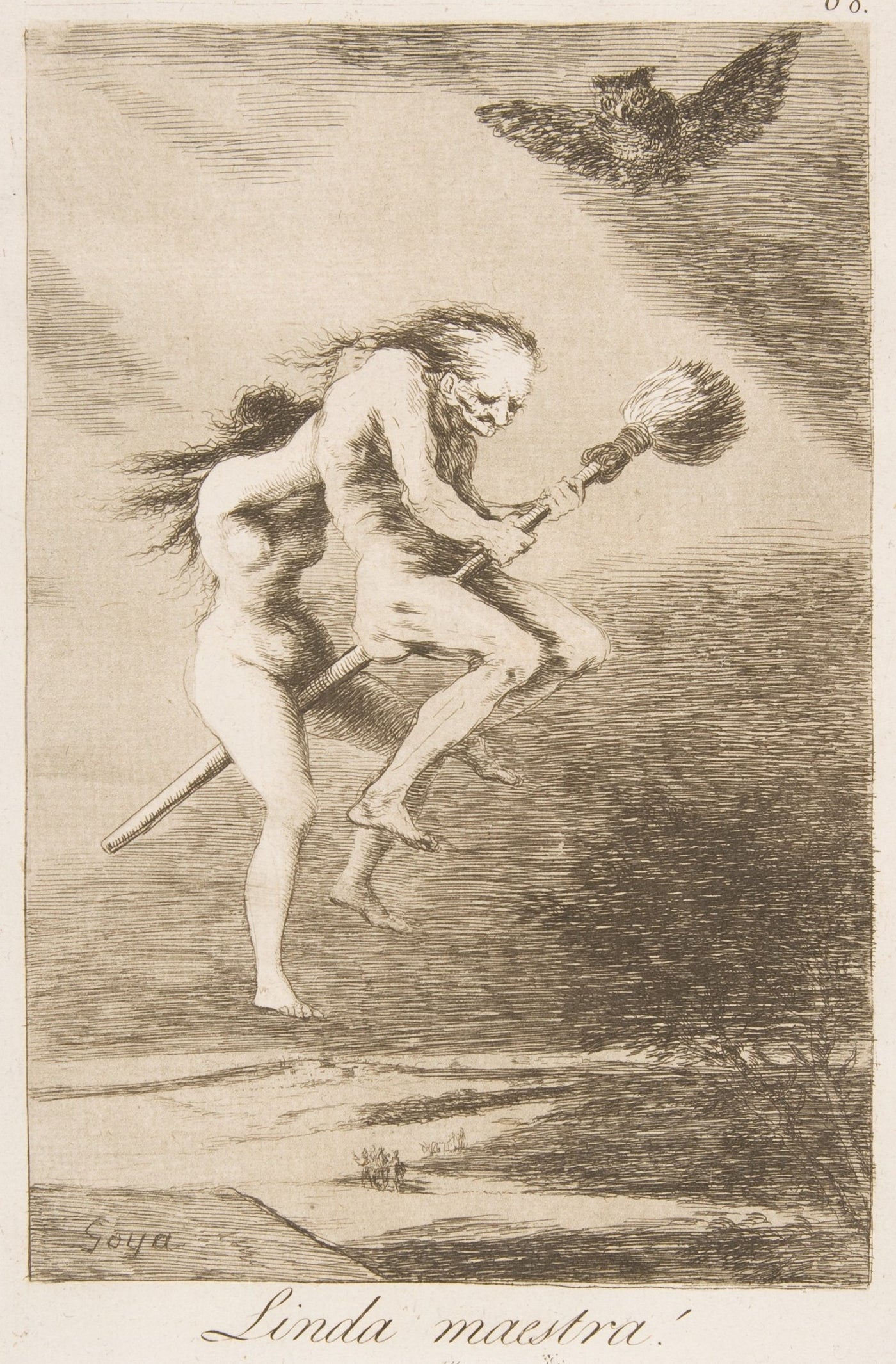
Goya witches on a broomstick — Pretty Teacher, Los Caprichos plate 68, whimsigoth wall art
+1526 / Basel

Death visits everyone

Hans Holbein drew Death calling on every rank of society — pope, emperor, knight, ploughman — while still in his twenties. The woodcuts were so pointed that the series waited more than a decade before anyone dared publish it.

Enter the dance
Holbein Death and the Knight woodcut - Dance of Death
+1582 / Nuremberg

Gold was never the point

The Splendor Solis manuscripts illustrate a process alchemists described as making gold: a king drowned and reborn, a peacock's tail of colour blooming inside a sealed flask. No one has ever made gold this way. The pictures survived because they are beautiful, which was arguably the point all along.

Enter the occult
Esoteric & Occult Art
+1799 / Madrid

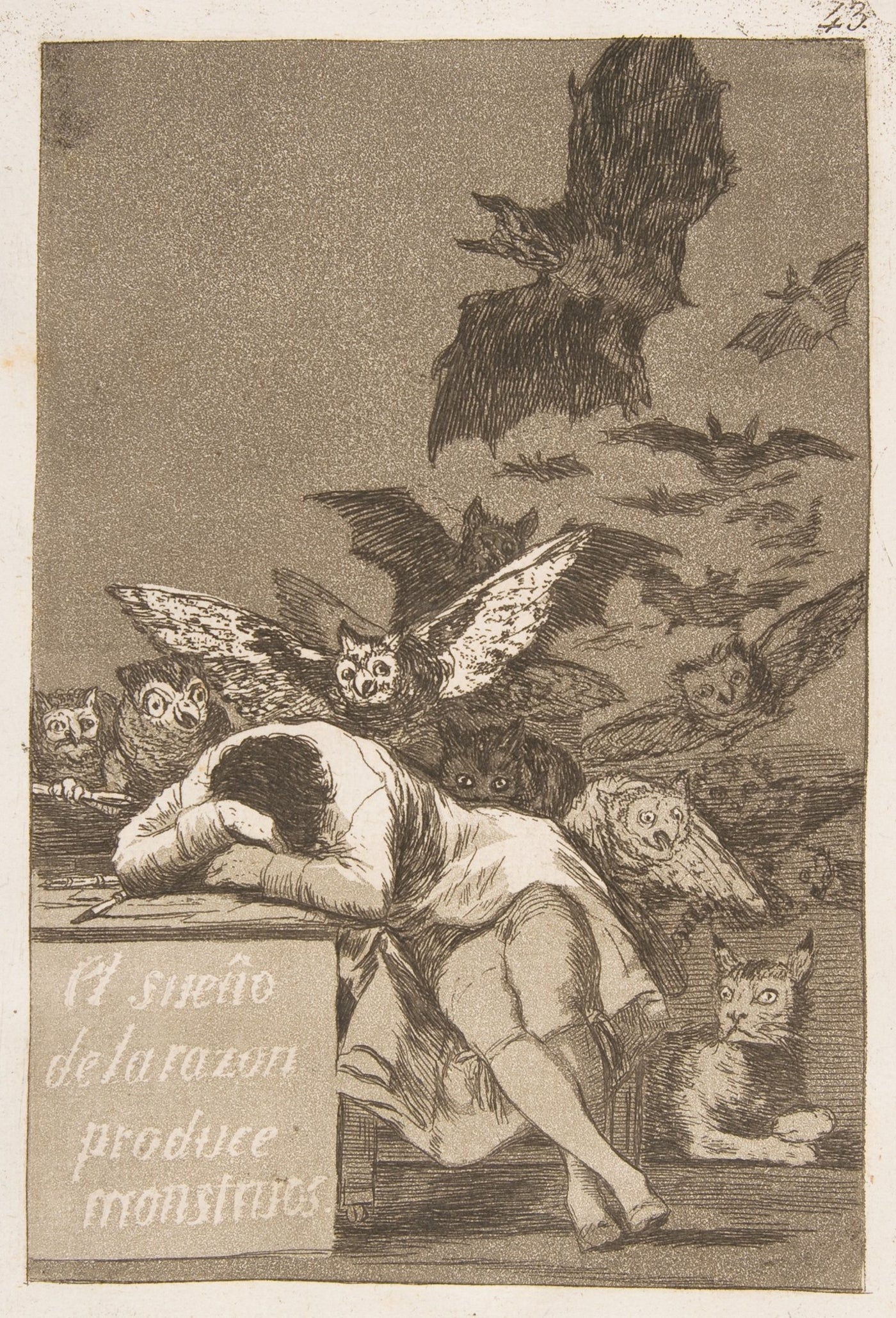
The sleep of reason

Goya was in his fifties, newly deaf and done flattering the court, when he etched eighty nightmares and put them up for sale. He soon withdrew them, wary of the Inquisition. The monsters outlived the fear.

Meet the monsters
Goya The Sleep of Reason Produces Monsters etching — gothic wall art
+1824 / London

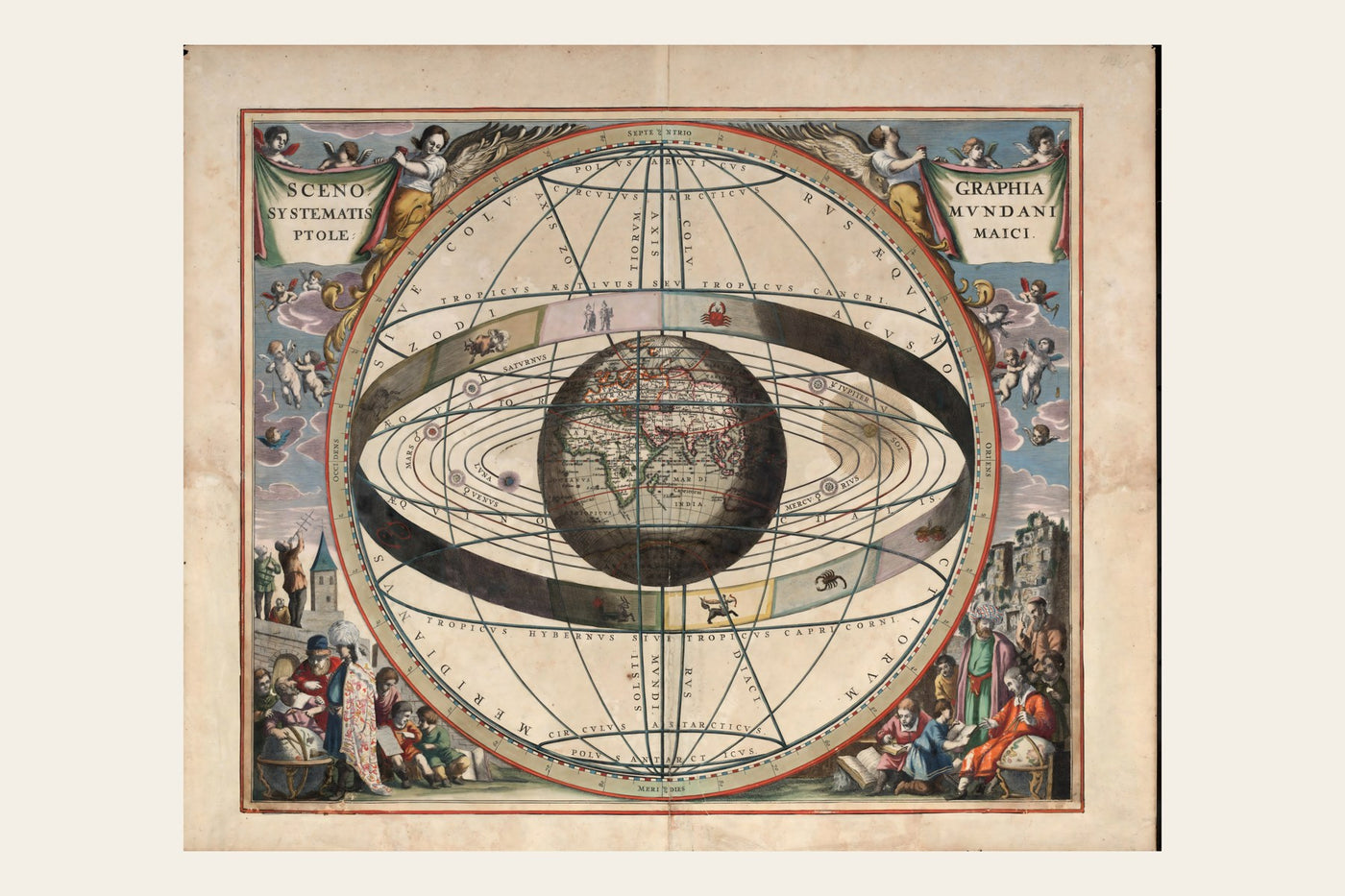
Hold it to the candle

Urania's Mirror was a boxed set of constellation cards, each pricked with tiny holes at the stars. Hold a card up to a candle and the constellation lit up in your hands. The set was credited only to “a lady”; the clergyman who almost certainly drew it went uncredited for over a century.

Enter the star cards
Cellarius celestial hemispheres star map print
+1827 / London

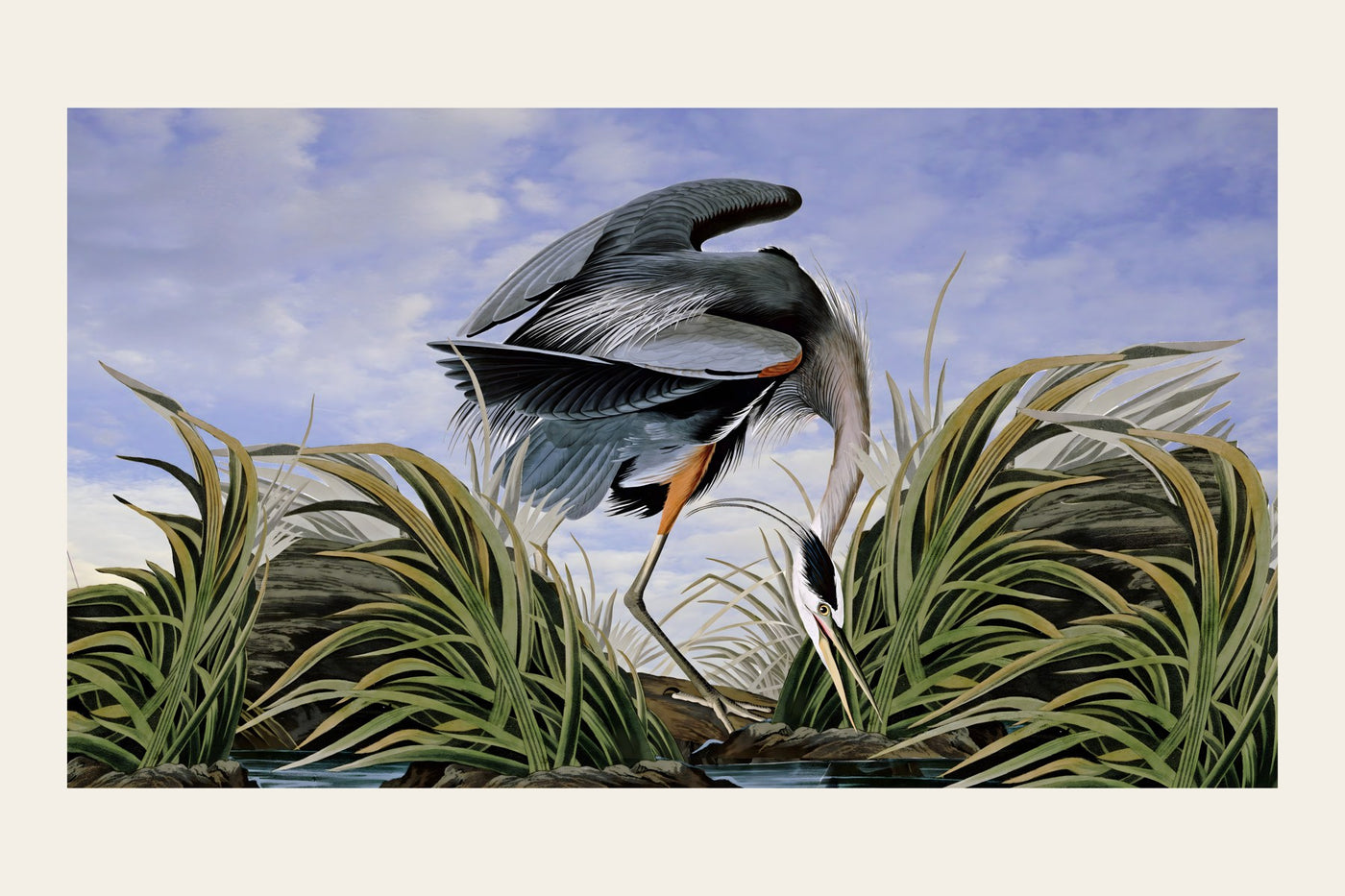
Life-size, or not at all

John James Audubon insisted on painting every bird life-size — the flamingo bends its neck because the page physically could not hold it. The project nearly ruined him more than once. We had to shrink the pelican.

Enter the aviary
Audubon Great Blue Heron plate from Birds of America
+1831 / Edo

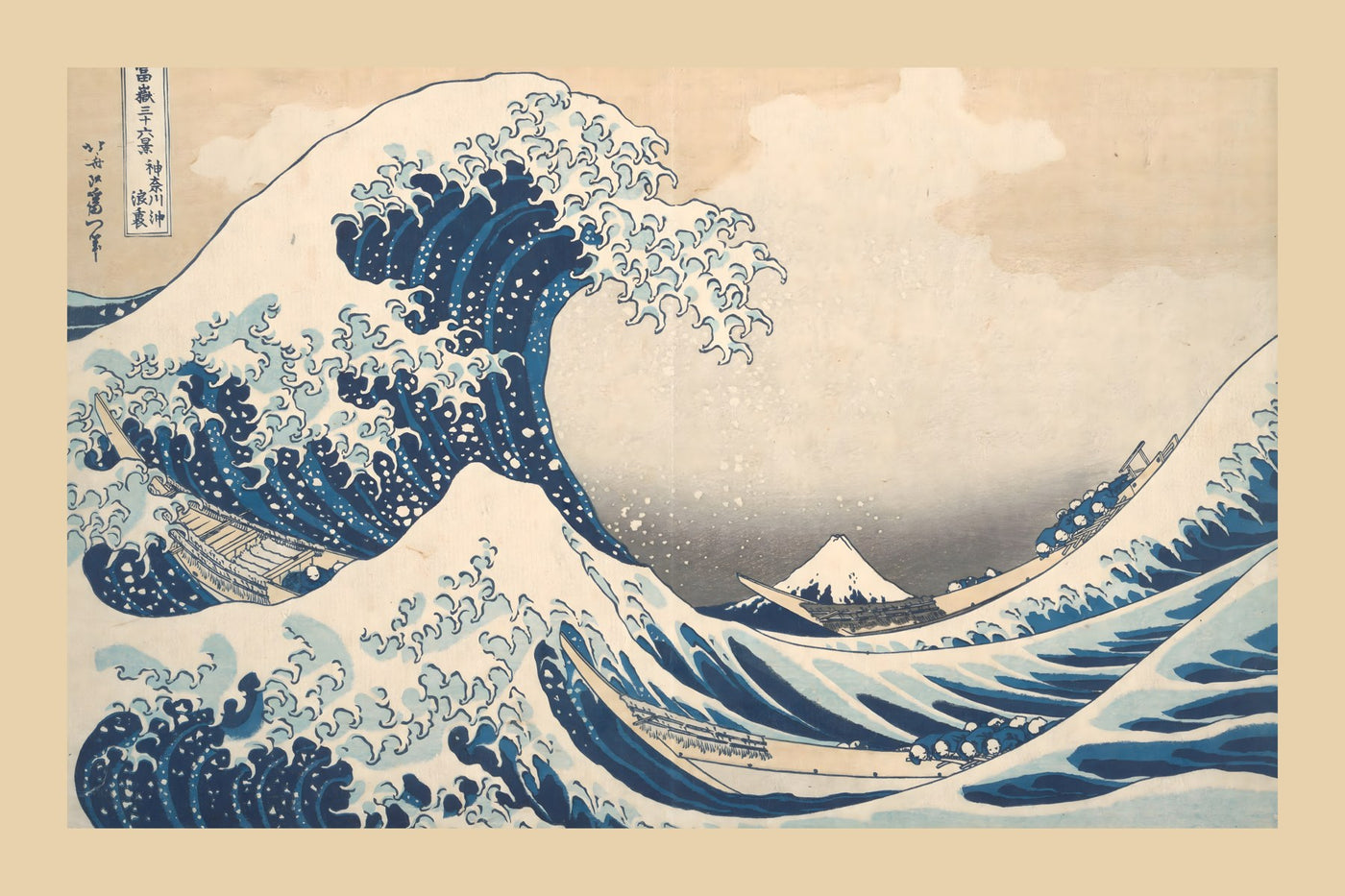
The old man mad about painting

Hokusai was around seventy when the Great Wave left his workshop. He signed late work ‘the old man mad about painting’ and insisted his real art would begin at ninety. He made it to eighty-eight.

Enter the woodblocks
Hokusai The Great Wave off Kanagawa woodblock print
+1861 / Paris

He paid for it himself

Gustave Doré's publisher refused to fund an illustrated Dante — too expensive, too strange. Doré paid for the printing out of his own pocket. It sold out. The publisher sent for more, and the images he almost never made became how most of the world still pictures Hell.

Enter the Inferno
Dante's Inferno Art
+1863 / New York

Santa arrived in the middle of a war

Thomas Nast drew Santa Claus for Harper's Weekly for more than twenty years, starting in 1863 with the Civil War still on — the fur suit, the North Pole workshop, the list of who had been good. Louis Prang printed America's first Christmas cards in 1875. Between them they drew the holiday we still hang up.

Enter the workshop
Vintage Christmas Prints collection — Thomas Nast Merry Old Santa Claus, framed on a gallery wall
+1881 / Harvard Observatory

He drew the heavens. He loosed a plague.

Étienne Trouvelot drew the heavens more faithfully than any camera of his century — and accidentally released the gypsy moth that still chews through American forests. The skies forgave him. The trees never did.

Enter the observatory
Cellarius celestial hemispheres star map print
+1883 / London

Gardens against the machine

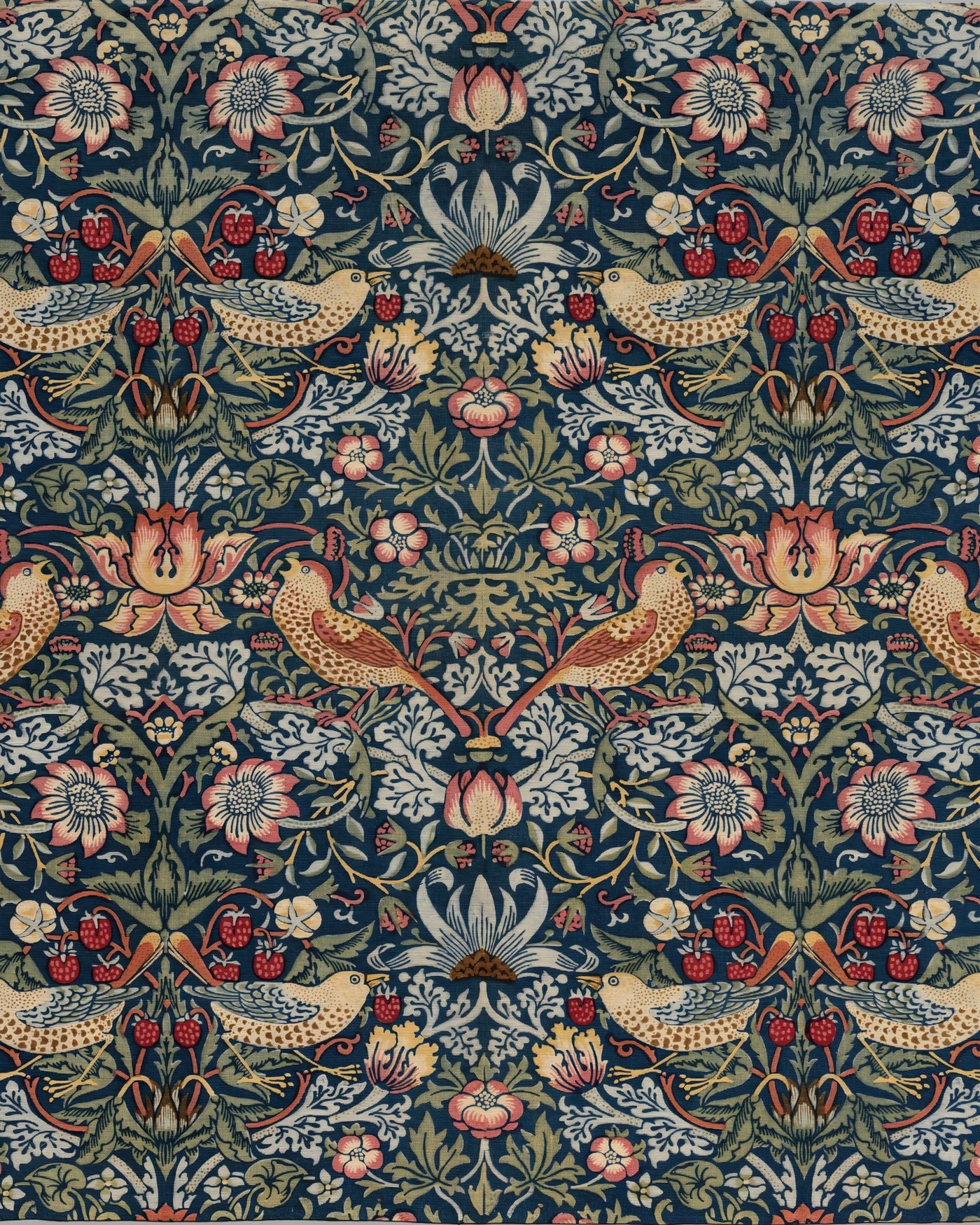
William Morris drew Strawberry Thief while factories swallowed England, insisting machine-age homes deserved hand-drawn gardens. His doctor blamed his death on ‘simply being William Morris, and having done more work than most ten men.’

Enter the pattern room
William Morris Strawberry Thief pattern print
+1894 / Paris

A movement, overnight

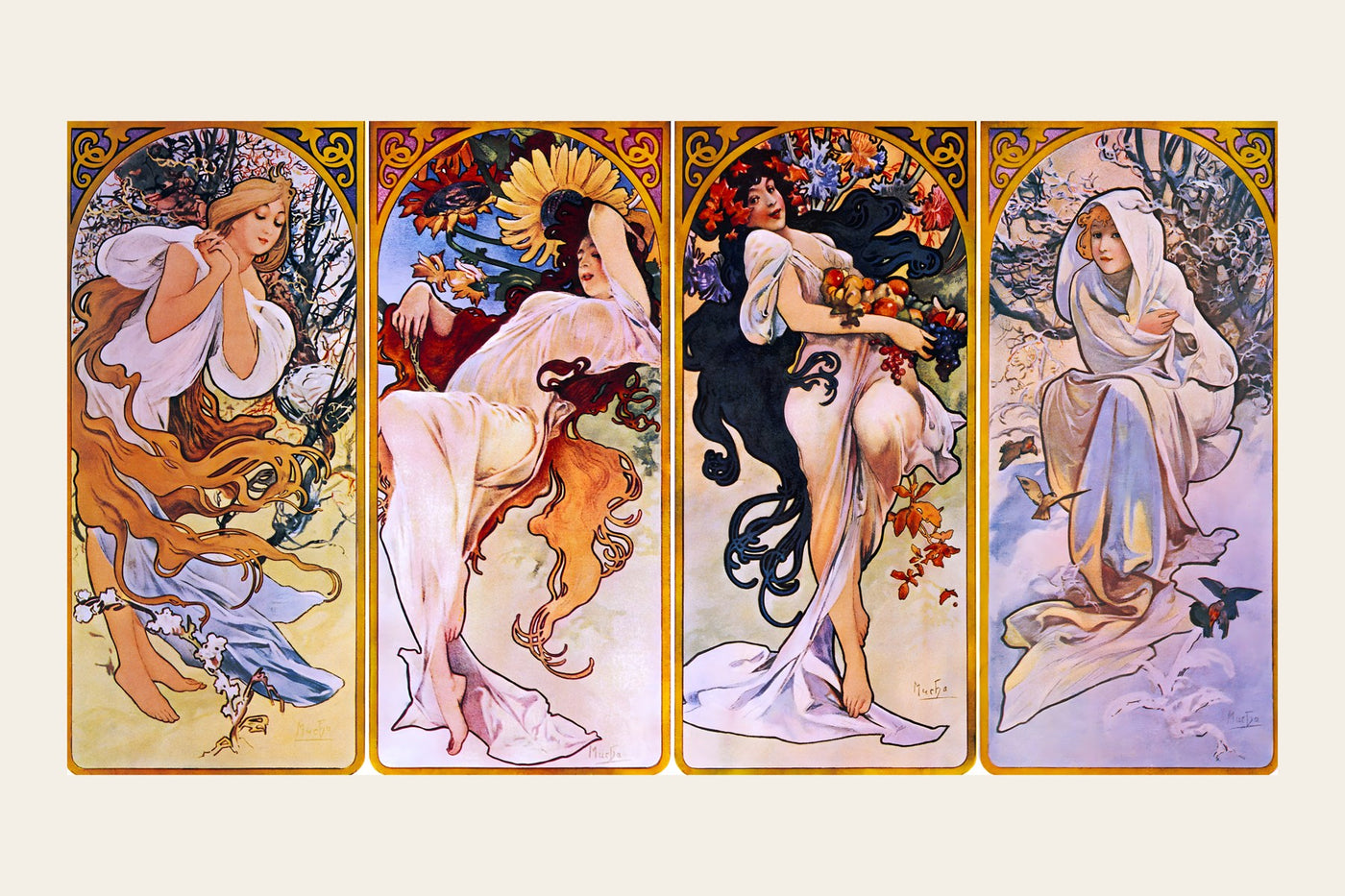
Alphonse Mucha was the only artist in the print shop over the holidays when Sarah Bernhardt needed a poster at once. She loved it and signed him for six years. Art nouveau began as a rush job.

Enter the belle époque
Alphonse Mucha The Four Seasons art nouveau panels
+1895 / Paris

He turned the street into a gallery

Jules Chéret's three-stone lithography put full colour on a poster at the scale of a wall. Paris filled with his dancing figures — so many that the city nicknamed them Chérettes. Art critics complained. Everyone else stopped and looked, which is the whole job of a poster.

Enter the belle époque
Vintage French Posters
+1900 / Paris

The walls of Paris sold dinner

Leonetto Cappiello and Jules Chéret turned street advertising into art — biscuits, apéritifs and absinthe sold by lithographs so loved that Parisians peeled them off the walls at night. The Amandines poster here still carries its 1900 world's-fair silver medal in the artwork.

Enter the kitchen
Absinthe Pernot vintage French cafe poster by Leonetto Cappiello
+1900 / Europe

Soap paid for the art

Perfume and soap houses hired the best poster artists money could buy — Mucha, Cappiello, Hohenstein — because a bar of soap is identical to every other bar of soap and only the picture could tell them apart. The products are long gone. The chromolithographs outlived them by a century.

Enter the bathroom
Bathroom Wall Art & Prints
+1909 / London

Seventy-eight cards, one flat fee

Pamela Colman Smith painted the entire deck in about six months — every card an original watercolour. She was paid a flat fee, earned no royalties, and died in obscurity while her deck became the most recognized in the world.

Enter the deck
The Sun card from the 1909 tarot deck — vintage tarot art print
+1910 / America

A penny bought the whole holiday

For one cent, Edwardian America mailed millions of Halloween postcards — witches, black cats and grinning jack-o'-lanterns. The golden age lasted barely fifteen years before the telephone and changing tastes ended it. The cards survived in attics.

Enter the séance
Jack O Lantern driving a red car — 1900s vintage Halloween postcard art
+1938 / America

When America broke, it hired artists

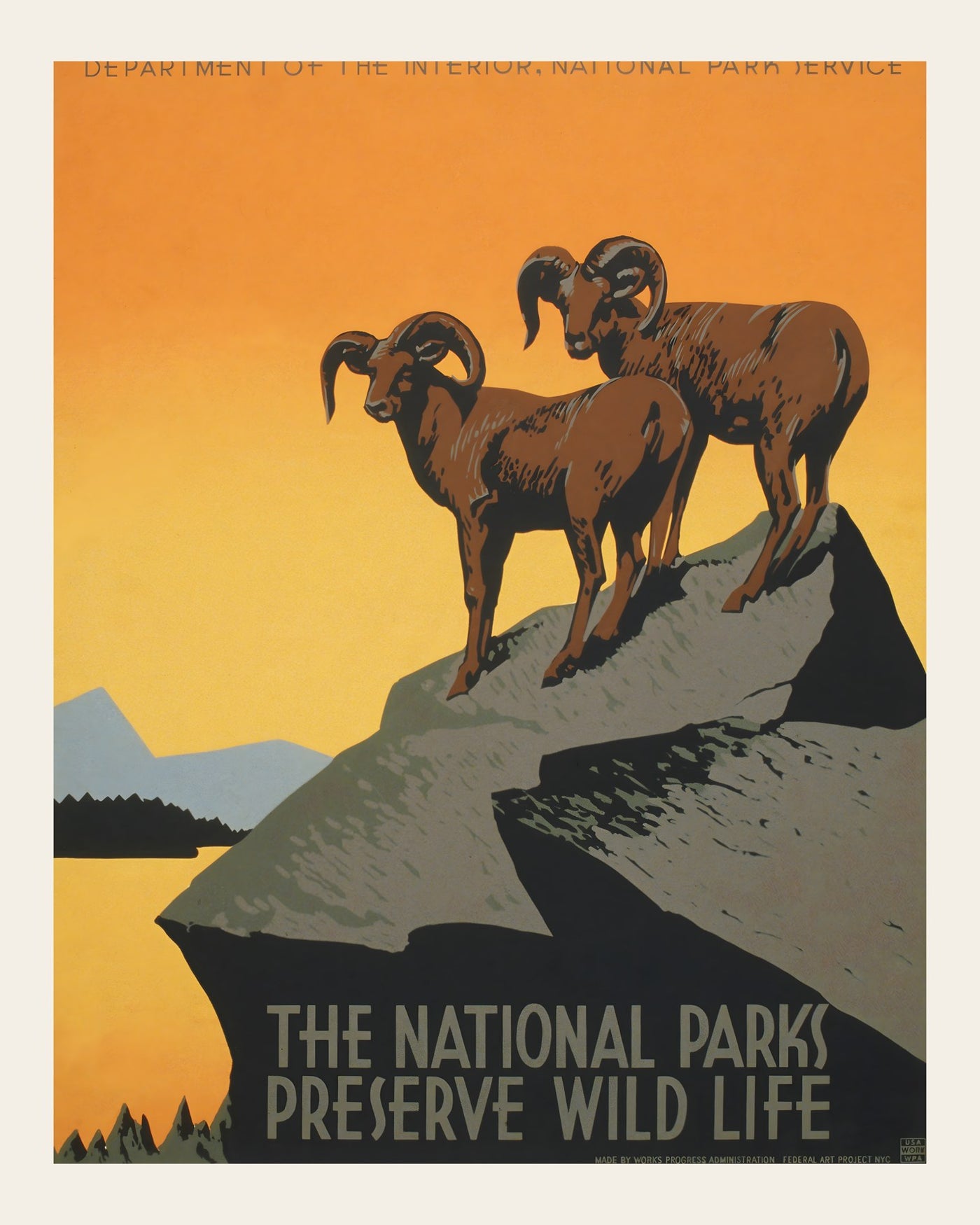
The WPA put painters on the federal payroll and sent them to sell the national parks. Posters went up by the thousand, then into the trash — few survived. Government art, public forever.

Enter the parks
WPA National Parks wildlife travel poster